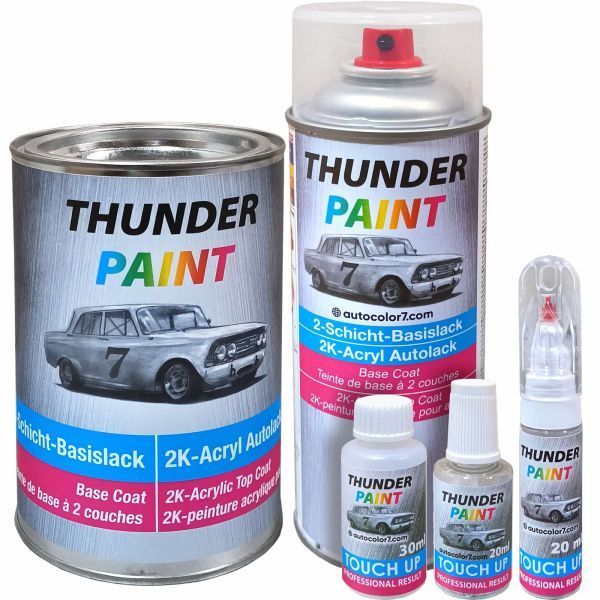
Zinc primer in a spray can.
Zinc spray – advantages
- dries quickly;
- can be easily sprayed directly from the can;
- adheres well to horizontal, vertical and curved surfaces;
- offers the effect of cold galvanizing;
- ensures corrosion protection;
- provides protection against weather influences and mechanical stress;
- forms a protective layer against car chemicals, dirt, gasoline and oils;
- protects particularly vulnerable areas – such as weld seams, cut edges, drilling and fastening points.
Zinc primer in a spray can – Application
Cold galvanizing involves applying a solution of finely divided zinc (Zn up to 95%, other components: resins and solvents) to metal surfaces. Cold galvanizing should be performed on degreased and cleaned metal. One advantage is that it can also be applied to areas already affected by rust. However, it is recommended to remove the corrosion mechanically or use a rust converter to enhance the effectiveness of the galvanizing.
Order of application of the zinc primer in the spray can:
Surface preparation : Wash, degrease and sand if necessary.
Preparing the zinc spray: Shake the can vigorously for 2-3 minutes, carry out a test spray, and adjust the spray jet if necessary (possible with some cans).
Painting : Apply a thin layer from a distance of approximately 20–30 cm. If the layer is too thin, a second coat can be applied after 10–15 minutes.
If the zinc spray isn't completely used up, clean the valve and close the can tightly. To clean, turn the spray valve down and spray until only clear air escapes.
The zinc layer applied from the spray can should dry for 20-30 minutes (please follow the manufacturer's instructions) before applying car paint or clear coats.